
Indri Agnéya
Indri Agnéya takes the Indri single malt style in a lightly peated direction. Matured in ex-bourbon and PX sherry casks, it brings together vanilla-led sweetness, dried fruit and oak with smoke that, in our experience stays firmly in the background rather than taking over the whisky.
Tasting notes
Listen to the review
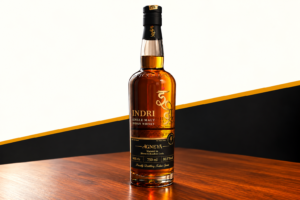
THE BOTTLE
Indri Agnéya is a lightly peated Indian single malt from Piccadily, produced at Indri in Haryana. Launched in July 2025, its name comes from Sanskrit and means “belonging to fire.”
Agnéya is matured in a combination of ex-bourbon American oak and PX sherry casks. According to Indri, the bourbon casks contribute vanilla, caramel and toasted wood characteristics, while the PX sherry casks bring dried fruit, warm spice and nutty notes.
Peat is deliberately part of the production. Piccadily says the indigenous six-row barley used for Agnéya is gently kilned over peat smoke, creating the lighter smoky character the expression was designed around.
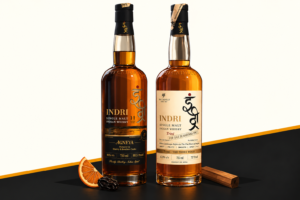
This also separates Agnéya from the flagship Indri-Trini. While Trini uses ex-bourbon, French wine and PX sherry casks, Agnéya combines bourbon and sherry maturation with a lightly peated spirit.
The whisky is bottled at 46% ABV, is non-chill-filtered, has no added colour, and is a product of India.
OUR TAKE
Agnéya brings forward a defined, confident style within India’s growing single malt category.
What worked particularly well for us was the balance between its different influences. The ex-bourbon side comes through in the vanilla, caramel and oak-driven sweetness, while the PX sherry maturation brings dried-fruit richness and a rounder character through the palate.
Then there is the smoke.
Agnéya is a lightly peated whisky, but we didn’t find the peat dominating the experience. Instead, it sat behind the sweeter, cask-led flavours and became more noticeable around the finish.
For us, that restraint is important. This doesn’t drink like a whisky built primarily around smoke.

The result is a profile where caramel, dried fruit, vanilla and oak remain at the centre, with a slightly smoky, rounded finish adding another layer rather than changing the direction of the whisky altogether.
The dual-cask maturation is therefore an important part of what makes Agnéya work for us. The bourbon and PX aren’t simply production details — their different influences were identifiable in what we tasted, while the subtle peat helps bring another dimension to the whisky without overpowering them.
More broadly, Agnéya represents something we find interesting about India’s evolving single malt category. Indian distilleries are increasingly exploring their own identities rather than simply looking towards established global styles.
For us, Agnéya feels like part of that progression!
Cheers!
It could also be an interesting entry point for someone curious about smoky whisky but unsure about more intensely peated styles. That broadly aligns with Piccadily's own positioning of Agnéya as a whisky where the smoke is intended to enhance rather than dominate the spirit.
For existing Indian single malt drinkers, it also offers a different direction within Indri's range without allowing peat to overwhelm the underlying whisky.
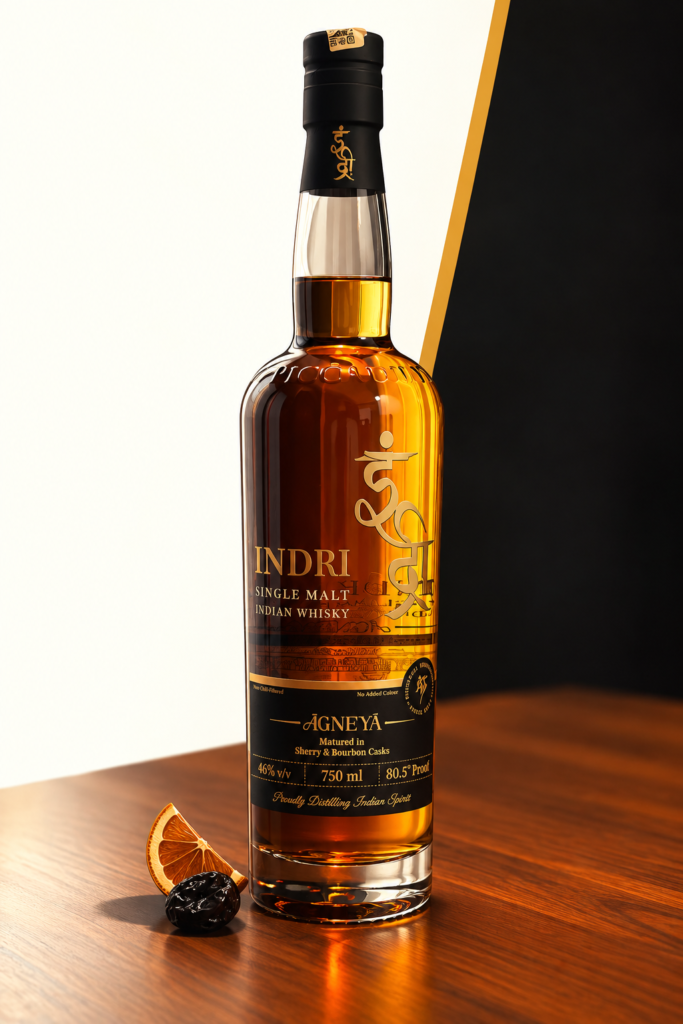
The peat isn't the headline for us. The balance is.
A confident Indian single malt that uses smoke with restraint while allowing its cask character to remain front and centre.
Keep reading
Why India’s Alcohol Market Isn’t Really One Market
Why Whisky Ages Differently in India
Frequently asked questions
What is a peated whisky?
Peated whisky gets its smoky character from the use of peat during the malting process. Peat is burned to produce heat and smoke while drying malted barley, and compounds from that smoke are absorbed by the grain before distillation.
The intensity can vary significantly, so “peated” doesn’t automatically mean heavily smoky. In Agnéya’s case, Piccadily says its six-row Indian barley is gently kilned over peat smoke, resulting in a deliberately lighter smoky character.
What does “Agnéya” mean?
Agnéya comes from Sanskrit and means “belonging to fire.” The name ties naturally into the whisky’s use of peat smoke, although the whisky itself is designed around a relatively restrained smoky character.
How peated is Indri Agnéya, and is it a good introduction to peated whisky?
Agnéya is deliberately lightly peated. Piccadily says its barley is gently kilned over peat smoke, with the smoke intended to enhance rather than dominate the whisky.
That matched our experience. Caramel, dried fruit, vanilla and oak remained at the centre, while the smoke sat further back and became more noticeable around the finish. If you’re curious about peated whisky but don't want to jump straight into a heavily smoky style, Agnéya could be an approachable place to start.
How is Indri Agnéya different from Indri-Trini?
The main differences are the peat and the cask combination. Agnéya is lightly peated and matured in ex-bourbon and PX sherry casks. Indri-Trini uses three cask types: ex-bourbon, French wine and PX sherry.
So Agnéya isn't simply a smokier version of Trini. Its lightly peated spirit and different maturation combination give it a distinct place within the Indri range.
Where is Indri Agnéya made?
Indri Agnéya is produced by Piccadily at its distillery in Indri, Haryana, India. It is made using indigenous six-row barley, which Piccadily says is gently kilned over peat smoke for Agnéya before the whisky goes through its maturation in ex-bourbon and PX sherry casks.
Is Indri Agnéya chill-filtered or artificially coloured?
No. Indri states that Agnéya is non-chill-filtered and has no added colour. It is bottled at 46% ABV.