
Why Whisky Ages Differently in India
India’s heat can make whisky interact with oak much more aggressively than it would in Scotland. But saying whisky simply “ages faster” here misses the more interesting story.
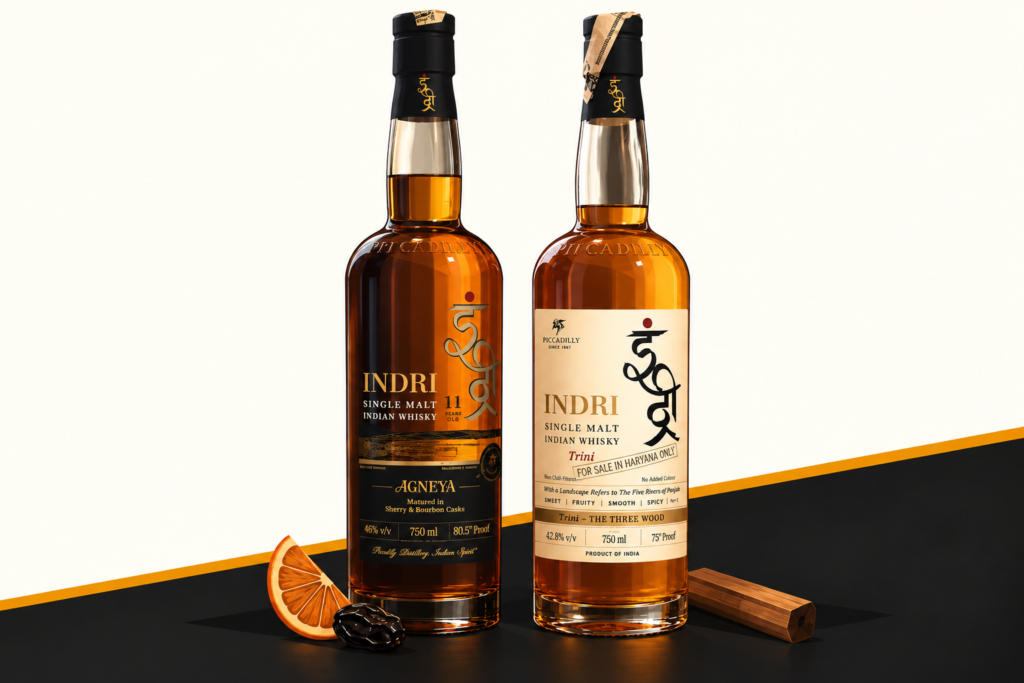
Put a four-year-old Indian single malt next to a 12-year-old Scotch and the numbers make it easy to assume which one has had more time to develop.
Technically, that’s true. One has spent eight more years in a cask. But those four years in India haven’t necessarily been gentle ones.
One of the most common things you’ll hear about Indian whisky is that it ages faster because India is hot. That’s not exactly wrong. It’s just a little too convenient.
Whisky doesn’t mature according to a universal clock. Where the cask sits, the temperature and humidity around it, and the type of cask being used all influence what happens to the spirit.
And India gives whisky a pretty intense place to grow up.
So what is actually happening inside a whisky cask?
Freshly distilled spirit doesn’t go into a barrel looking or tasting like the whisky you eventually pour into a glass. During maturation, the spirit extracts colour and flavour compounds from the wood, while oxidation and other chemical reactions gradually change its character.
At the same time, some of the liquid escapes through evaporation — the famous angel’s share.
The environment around the barrel influences all of this. That’s where India gets interesting.
Heat turns up the interaction
Higher temperatures generally encourage greater interaction between spirit and wood and can increase the rate at which certain compounds are extracted from oak.
India obviously isn’t short of heat. But saying “India is hot” creates another problem: which India?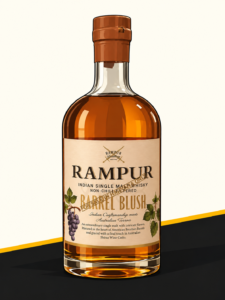
Paul John matures its whisky in tropical Goa, while Amrut matures in Bengaluru. Indri sits in Haryana, where whisky can experience brutally hot summers, cold winters and monsoon humidity. Rampur matures near the Himalayan foothills, with another set of seasonal conditions.
Then there’s Godawan in Alwar, Rajasthan. Diageo describes its maturation environment as warm, dry and arid, with temperatures reaching around 100°F (38°C) and above.
That aridity also contributes to a heightened angel’s share. Compare Rajasthan’s dry heat with humid, coastal Goa and the problem with talking about an “Indian climate” as though it were one thing becomes pretty obvious.
It isn’t.
So even within Indian whisky, geography matters.
The angels are especially thirsty here!
If you want one number that immediately shows how different Indian maturation can be, look at evaporation.
Whisky slowly escapes through the barrel while it matures. In Scotland, annual losses are generally relatively modest. In India, they can get pretty savage.
 Paul John says its angel’s share in Goa is around 8–10% per year, compared with roughly 2–3% in colder climates such as Scotland.
Amrut’s Rakshit Jagdale has previously described evaporation in Bengaluru at roughly 10% in the first year and around 9–9.5% in subsequent years.
To put that into perspective, Jagdale gave the example of a roughly 200-litre barrel filled with around 195–197 litres of spirit. After about three-and-a-half to four years, it could be down to somewhere around 125–130 litres.
A lot of that whisky is literally gone before anybody gets to drink it.
Time gets expensive when the angels are drinking this much.
But humidity changes the story again
There’s another layer to the angel’s share that doesn’t get talked about quite as much. It isn’t only about how much liquid disappears, but also what disappears.
A whisky barrel contains both water and ethanol, and environmental conditions affect their relative rates of evaporation. In drier conditions, proportionally more water can be lost, causing the alcoholic strength to rise; in more humid conditions, ethanol loss can dominate and the strength may fall.
Amrut, for example, has reported losing more water than alcohol during maturation in Bengaluru, causing its spirit to become more concentrated.
So temperature alone doesn’t explain what’s happening. Humidity, airflow, warehouse design and even a barrel’s position within the warehouse can influence maturation too.
This is why reducing the whole subject to “hot country versus cold country” doesn’t really work.
So is four years in India basically 12 years in Scotland?
No.
And this is probably the biggest misconception worth clearing up.
You’ll occasionally hear statements along the lines of “one year of ageing in India is equivalent to three years in Scotland.” Sometimes it’s three, sometimes four, depending on who’s telling the story.
It’s a neat explanation. Whisky isn’t that neat.
Higher temperatures can accelerate extraction from oak, increase evaporation and speed up certain chemical reactions. But maturation isn’t one process with a speed setting, and all the transformations happening inside a barrel don’t accelerate by exactly the same amount.
More oak extraction doesn’t automatically mean more maturity either. Push the relationship with the wood too far and you can end up with too much oak influence.
There simply isn’t a reliable whisky calculator where: 1 year in India = X years in Scotland.
A five-year-old Indian whisky isn’t secretly a 15-year-old Scotch. It’s a five-year-old Indian whisky that has matured under very different conditions.
And that’s actually more interesting.
Which makes age statements slightly awkward
Whisky drinkers have been trained remarkably well by numbers. Twelve sounds good, 18 sounds better, 25 sounds expensive.
Age statements absolutely tell us something useful: they tell us the minimum amount of time the whisky in that bottle has spent maturing. What they don’t tell us is whether it’s good.
Indian whisky makes that distinction especially obvious. A whisky matured for four, five or six years under Indian conditions may already have had significant interaction with its cask and lost a substantial amount of liquid through evaporation.
Keeping it in wood simply to reach a number that looks more impressive on the label doesn’t automatically make it better. Sometimes additional maturation might improve it; sometimes the cask may already have given the whisky everything it needed.
The whisky maker’s job isn’t to keep the barrel closed for as long as possible. It’s knowing when to open it!

Maybe we should stop translating Indian whisky into Scotch
For years, Indian single malt had something to prove. The category was inevitably compared with Scotch because Scotch established many of the reference points whisky drinkers understand: regions, age statements, casks, prestige and, eventually, price.
But Indian whisky becomes more interesting when we stop trying to convert it into Scottish terms.
A five-year-old Indian single malt doesn’t need to become “equivalent to a 15-year Scotch” before we’re allowed to take it seriously.
Its age tells us how long it spent in a barrel. Its climate tells us something about what may have happened during that time. Its cask tells us something else. And ultimately, the glass tells us whether any of it worked.
India’s heat can create intense interaction between spirit and oak. High evaporation creates its own challenges, humidity changes how that evaporation behaves, and the climatic differences between Goa, Bengaluru, Haryana, Uttar Pradesh and Rajasthan mean even Indian maturation isn’t one single style.
So yes, whisky can develop very differently here. But “India is hot, so whisky ages faster” is only the beginning of the explanation.
The better way to put it is much simpler: Indian whisky doesn’t just age FASTER. It ages DIFFERENTLY!
That’s particularly important with Indian whisky, where climate, evaporation and cask interaction can make relatively young whiskies remarkably expressive. We’d rather judge what actually ended up in the glass than mentally multiply the number on the bottle until it looks more impressive.
Indian whisky doesn’t need a Scotch-equivalent age to justify itself.